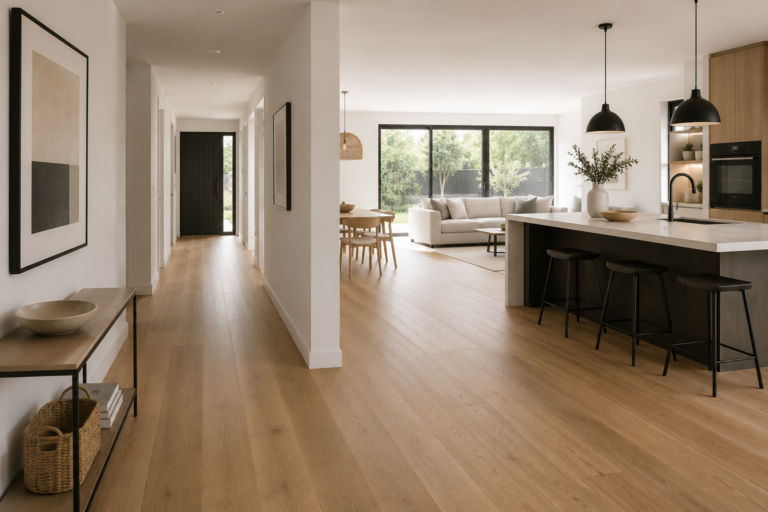
Elevating Minimalist Homes with the Right Flooring

Minimalist interior design is all about simplicity, clean lines, and a focus on functionality. However, minimalism doesn’t mean your home has to be cold or stark. You can use a variety of elements to liven up your space while sticking to the “less is more” ethos of minimalism. The colour, material, and finish of your flooring, in particular, make it a key player in maintaining this ethos.
Why Flooring Matters in Minimalist Design
It’s important to understand that flooring plays a crucial role in setting the tone for any space, regardless of design, intention or purpose. Your floor acts as a canvas that ties everything together, from the architecture and colour palette to the furniture and overall ambience. And when it comes to a minimalist interior, every element matters.
As a foundational element, the floor covers a large surface area and is typically the first thing someone notices. Minimalist interiors have fewer pieces of furniture and décor concealing the floor, which means you and your guests will see it more. So you’ll want to choose a design and material you’re proud of.
With their neutral colour palettes and simple shapes, minimalist interiors can risk appearing flat or monotonous, but you can use your floor to provide balance and contrast, adding visual interest through grain patterns, hues, or finishes without deviating from the minimalist ethos. A common concern of minimalist spaces is that they can feel too stark and cold, but you can use Luxury Flooring to add a layer of warmth, both physically and visually. Wood, in particular, is a great material to enhance the comfort of your home.

Floors that Transform Minimalist Spaces
Known for its timelessness, solid wood flooring adds a touch of natural elegance to any space. Its organic grain patterns and warm tones complement the clean lines of minimalist design, bringing that desired hint of warmth to your space. Lighter woods, like oak or maple, can brighten a room and create a sense of spaciousness, whereas darker woods, like walnut, offer a more dramatic and luxurious look. You can even use wide planks to enhance the streamlined feel of minimalist spaces.
Alternatively, engineered wood offers the same beauty and warmth as real wood, but with added durability, making it ideal for minimalist homes that prioritise style and functionality. It’s also available in a range of finishes and colours, allowing you to tailor your floor to your specific minimalist vision. Matte finishes, in particular, tend to blend seamlessly into minimalist designs, giving your room a sense of understated elegance.
If you’re after a floor that balances aesthetics with practicality and affordability, then luxury vinyl tiles (LVT) are a great choice. Mimicking the appearance of natural materials, such as wood or stone, LVT is easier to maintain and quite durable. It’s perfect for busy areas like kitchens and hallways. You’ll want to choose luxury vinyl tiles in soft, natural tones to maintain the serene, calm minimalist vibe.
Like LVT, laminate flooring is another cost-effective alternative that mimics hardwood and stone. Its smooth and consistent surface enhances the clean and uncluttered appearance that minimalism favours. Consider laminate with subtle wood grains, which can add just enough texture without overwhelming your space.

Pairing Your Floor to Your Interior
Once you’ve selected your minimalist flooring you need to understand how to pair it with the rest of your interior.
Stick to neutral tones. Minimalist interiors thrive on simplicity, so you should choose flooring in neutral colours that blend seamlessly with your walls ad furniture. Light wood or stone tones are excellent for bright, airy spaces, whereas darker shades can help ground your room, adding a sense of warmth.
Adding texture through flooring can also help to soften the minimalist aesthetic without detracting from its clean lines. Flooring with subtle grain patterns or matte finishes can create a more tactile and inviting atmosphere.
If your space has architectural features like large windows or exposed beams, you’ll want to select flooring that complements these elements. Natural materials can help emphasise them, enhancing the overall vibe of your minimalist interior.
While flooring plays a major role in adding warmth and elegance to your home, don’t forget to layer in soft furnishings like rugs or throws. Minimalism doesn’t mean you have to avoid these “extra” pieces, in fact, they can help your space feel softer and more cosy, while staying true to minimalist principles.
The Foundation of Elegance
In minimalist design, less is more. But that doesn’t mean you should skimp out on quality. Flooring offers you the perfect opportunity to add warmth, depth, and a touch of everyday luxury to your minimalist interiors. Whether you choose the elegance of solid wood, durability of engineered wood, or the practicality of vinyl and laminate flooring, you can transform your minimalist space, creating a home that feels inviting, elegant, and effortlessly sophisticated.